
Umkhosi weNcwala
A sacred thanksgiving ceremony marking renewal, unity, and the enduring heritage of the abaNgoni people under the authority of Inkosi YamaKhosi.
Umkhosi weNcwala
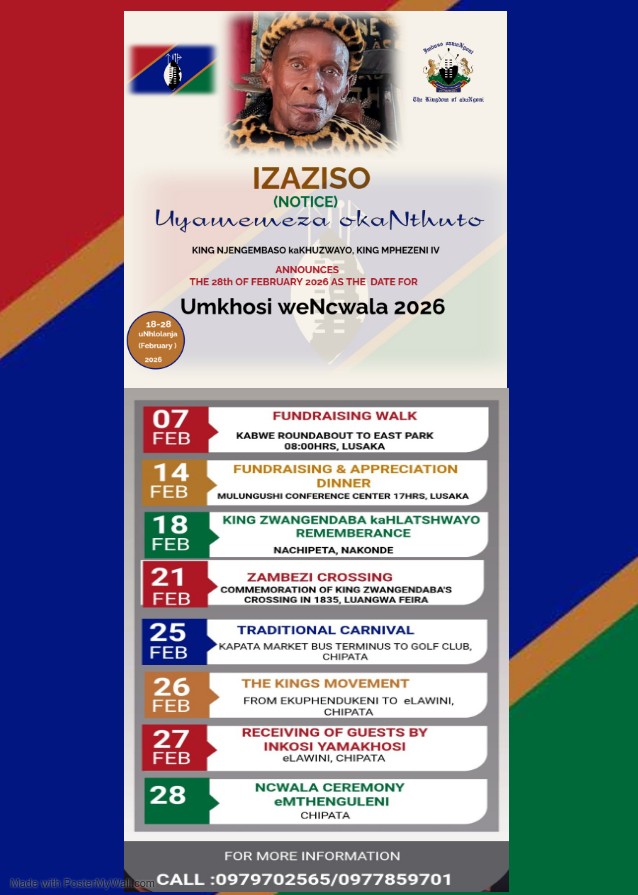
Detailed Program – 2026
About Ncwala - Visitor's Information
Umkhosi weNcwala (also known as Ncwala or the First Fruits Ceremony) is one of the most sacred and defining traditional ceremonies of the abaNgoni people. It is not merely a cultural event, but a profound national and spiritual institution that affirms kingship, renews the covenant between the people and their ancestors, and strengthens unity within the nation.
At the heart of Umkhosi weNcwala is the reaffirmation of the authority and legitimacy of the king, who serves as both political leader and spiritual custodian of the nation. Through prescribed rituals and observances, the ceremony symbolizes the king’s role as the protector of the land, the people, and their moral order. His participation is essential, as the well-being of the nation is believed to be inseparably linked to his spiritual standing.
The ceremony is deeply connected to the agricultural cycle, particularly the offering and blessing of the first fruits of the season. These offerings express gratitude for sustenance received and invoke continued abundance, rain, and fertility of the land. Until the rites of Ncwala are properly performed, the consumption of the new harvest is traditionally restricted, underscoring the sacred relationship between nature, leadership, and spiritual law.
Umkhosi weNcwala is also a powerful expression of ancestral reverence. Through ritual actions, prayers, and symbolic acts, the living acknowledge the presence and guidance of those who came before them. The ancestors are regarded as guardians of the nation’s values, protectors in times of conflict, and intermediaries between the spiritual and physical worlds. Their approval is sought for harmony, strength, and continuity.
Beyond its spiritual dimension, the ceremony reinforces national unity and collective identity. It gathers subjects from across the kingdom, transcending clans and localities, and renews a shared sense of belonging. Traditional regalia, warrior displays, music, and disciplined formations serve not as entertainment alone, but as visual affirmations of history, discipline, and resilience.
In essence, Umkhosi weNcwala stands as a living testament to the abaNgoni worldview — one in which leadership, spirituality, land, and people are inseparably bound. It is a moment of renewal, remembrance, and recommitment, ensuring that the values of the past continue to guide the nation into the future.
PLAN YOUR VISIT
Transport
🚌 Transport (From Lusaka)
Travel to Chipata can be made by road or air. From Lusaka, the most common option is road transport via the Great East Road, a journey of approximately 570 km. Several long-distance bus operators and private coaches operate daily services between Lusaka and Chipata.
For those traveling by private vehicle, the route is well established, with fuel and rest stops available along the way. Visitors are advised to plan their journey early, especially during the ceremony period when traffic volumes increase.
Upon arrival in Chipata, local transport arrangements are available to reach eMthanguleni, the ceremonial site. Visitors are encouraged to seek guidance from local authorities or event organizers for directions and timing.
✈️ Flights from Lusaka
For visitors who prefer a faster and more convenient journey, air travel is available between Lusaka and Chipata.
Domestic flights operate from Kenneth Kaunda International Airport to Chipata Airport. The flight time is approximately 1 hour, making air travel the quickest option to reach the Eastern Province.
Flight schedules may vary depending on the season and demand. Visitors are strongly advised to:
Book flights well in advance, especially around the Ncwala period
Confirm return flights early, as seating may be limited during peak ceremonial days
- Chipata Airport is a small regional airport, and ground transport arrangements should be planned ahead of time.
Dress & Etiquette
👘 What to Wear
Umkhosi weNcwala is a sacred ceremony, and appropriate attire is essential.
Visitors are encouraged to wear:
Modest clothing that covers shoulders and knees
Neutral or traditional colors
Comfortable footwear suitable for outdoor terrain
Those with traditional attire are welcome to wear it as a sign of respect and solidarity. Bright, revealing, or overly casual clothing is discouraged, as the ceremony is not a festival but a spiritual and cultural observance.
🤝 Etiquette & Conduct
All attendees are expected to observe proper conduct throughout the ceremony.
Follow instructions given by royal aides and marshals
Refrain from crossing restricted areas
Photography and video recording should only be done where permitted
Silence and attentiveness are required during sacred moments
Standing or pausing when the King appears is a sign of respect
Visitors are reminded that Umkhosi weNcwala is governed by tradition and protocol. Respect for customs ensures harmony and preserves the dignity of the ceremony.
Stay Connected with Umkhosi weNcwala
Umkhosi weNcwala is guided by tradition, protocol, and royal instruction. Visitors and members of the public are encouraged to stay informed through official channels for updates, guidance, and announcements relating to the ceremony.
Choose how you would like to engage:
Contact the Organizing Team
For inquiries regarding attendance, protocol, or general information.View the Kingdom Gallery
Explore historical and ceremonial moments that reflect the heritage and continuity of the abaNgoni people.Follow Official Updates
Receive timely announcements, notices, and ceremonial updates through our official communication platforms.
All information shared through official platforms is subject to guidance from traditional authority.