Origins and Migration
About the Kingdom of abaNgoni
Custodians of heritage, unity (Ubumbano), and tradition
The Kingdom of abaNgoni stands as a symbol of identity, continuity, and cultural pride,
preserving the values and traditions passed down through generations.
Who Are the abaNgoni?
The abaNgoni are a proud people bound by shared ancestry, discipline, and cultural values that have endured across generations. Known for their strong sense of unity, respect for tradition, and communal responsibility, the abaNgoni identity is rooted in history while remaining relevant in the present day.As a people, the abaNgoni place great importance on leadership, cultural expression, andthe preservation of customs that define who they are and where they come from.

Our Origins
The AbaNgoni originate from the Nguni peoples of southern Africa, with their recorded royal history closely linked to King Zwangendaba Kahlatshwayo Jele, born in 1777 in present-day KwaZulu-Natal, South Africa. In 1818, following the upheavals of the Mfecane and the defeat of the Ndwandwe alliance at the Battle of the uMhlathuze River, King Zwangendaba led his people on a historic migration northward.
Between 1821 and 1845, the AbaNgoni journeyed through Eswatini, Mozambique, Zimbabwe, Zambia, and Malawi, establishing settlements, assimilating communities, and preserving their military organization, cultural traditions, and sacred ceremonies. The crossing of the Zambezi River in 1835 marked a defining moment in this migration. Although King Zwangendaba passed away in 1845, his leadership laid the foundation for Ngoni kingdoms and communities that continue to thrive across Central and Eastern Africa today.
01
Migration
From 1818 to 1845, under the leadership of King Zwangendaba Kahlatshwayo Jele, the AbaNgoni undertook a disciplined northward migration from present-day KwaZulu-Natal through Eswatini, Mozambique, Zimbabwe, Zambia, and Malawi. Marked by key events such as the Battle of the uMhlathuze (1818) and the crossing of the Zambezi River (1835), this journey shaped the establishment of Ngoni communities across Central and Eastern Africa and laid the foundation for their enduring cultural and royal legacy.
02
Settlement in Zambia
The settlement of the AbaNgoni in present-day Zambia marked a significant phase in their long migration under the leadership of King Zwangendaba Kahlatshwayo Jele. In 1835, after years of movement through southern and eastern Africa, the AbaNgoni crossed the Ugwembe River, now known as the Zambezi River, a defining moment that symbolised both survival and renewal.
Upon entering Nsengaland, the AbaNgoni established an important settlement at Mkoko, in what is today Petauke District. They remained in this area for approximately four years. As with previous settlements, they reconstructed their villages using ancestral names and maintained their military organisation, governance structures, and sacred cultural practices, including the Incwala ceremony. Mkoko served not as a permanent capital, but as a strategic base during a period of regrouping and consolidation.
While in Zambia, King Zwangendaba reassessed his priorities. The loss of cattle during earlier stages of the migration, particularly during the Zambezi crossing, compelled the AbaNgoni to seek lands with greater livestock potential. Although Mkoko provided security and stability, it lacked sufficient cattle resources to sustain long-term settlement. As a result, the AbaNgoni later moved northward and eastward in search of more suitable lands.
Nevertheless, this early settlement marked the beginning of Ngoni presence in Zambia and laid the foundation for enduring historical, cultural, and political ties between the AbaNgoni and the region. Zambia thus occupies a central place in Ngoni history—as a land of transition, renewal, and the continuation of a royal legacy that would later shape Ngoni communities across Central and Eastern Africa.
03
Kingdom & Continuity
The Ngoni Kingdom is founded on the leadership, vision, and enduring legacy of King Zwangendaba Kahlatshwayo Jele, whose authority extended beyond conquest and migration to the establishment of lasting systems of governance, culture, and identity. Even as the AbaNgoni dispersed across vast regions of Central and Eastern Africa, the principles of kingship, military organisation, and social order remained intact.
Following King Zwangendaba’s death in 1845, the continuity of the kingdom was preserved through established succession structures and regencies, culminating in the coronation of King Mphezeni kaZwangendaba in 1847. Although divisions emerged, leading to the formation of Ngoni communities in present-day Zambia, Malawi, Tanzania, and beyond, each retained allegiance to shared traditions, royal lineage, and cultural practices.
Central to this continuity were sacred institutions such as the Umkhosi weNcwala ceremony, the authority of the Inkhosi, and the preservation of ancestral laws and customs. These elements ensured that, despite distance and political change, the Ngoni people remained united by a common heritage. Today, the Ngoni Kingdom stands as a living institution—rooted in history, sustained through tradition, and carried forward by generations committed to honouring and safeguarding their royal and cultural identity.
The Kingdom and Its Leadership
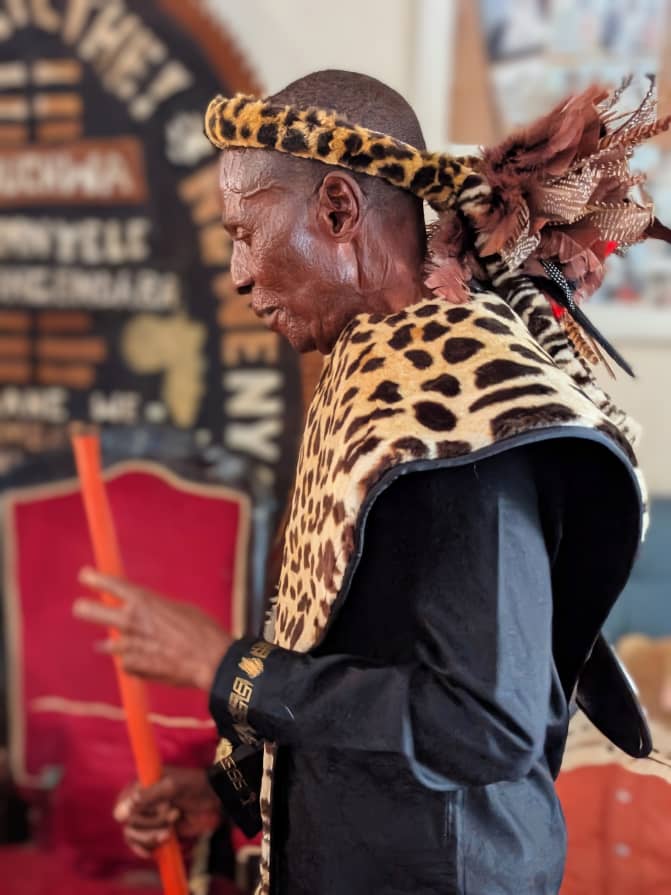
Leadership within the Ngoni Kingdom has historically been the foundation of unity, order, and continuity. From the era of King Zwangendaba Kahlatshwayo Jele, Ngoni leadership was characterised by discipline, strategic authority, and deep respect for ancestral law. The king (Inkhosi) ruled not as an isolated figure, but as the custodian of the people, culture, and land.
Traditional governance operated through a structured hierarchy that included senior chiefs, headpersons, and councils of elders. These leaders were responsible for administration, justice, military organisation, and the preservation of customs and ceremonies. Decision-making was guided by consultation, collective wisdom, and adherence to established tradition, ensuring balance between authority and accountability.
Following periods of migration and settlement, Ngoni leadership structures adapted to new environments while maintaining continuity of royal lineage and governance principles. Today, traditional leaders continue to play a vital role in cultural preservation, community cohesion, and engagement with modern state institutions. Through their leadership, the Ngoni Kingdom remains anchored in its heritage while guiding its people in a changing world.
Umkhosi weNcwala – A Living Celebration
Umkhosi weNcwala is a powerful expression of abaNgoni identity, gratitude, and unity. Through
ceremony, music, dance, and traditional regalia, the people come together to honor
their heritage and give thanks while strengthening bonds across generations.
More than a ceremony, Ncwala represents continuity, renewal, and cultural pride.
The Kingdom Today
Today, the Ngoni Kingdom of Zambia remains a living and respected institution, rooted in centuries of history while actively engaging with contemporary society. The kingdom continues to uphold its royal lineage, cultural values, and traditional governance systems, serving as a unifying force for the AbaNgoni people across Zambia and the wider region.
Traditional leadership structures remain central to the kingdom’s identity, with the Inkhosi YamaKhosi, chiefs, and headpersons playing key roles in cultural preservation, conflict resolution, and community cohesion. Sacred ceremonies such as Ncwala (Umkhosi weNcwala) continue to be observed, reaffirming spiritual continuity, ancestral authority, and collective identity.
In the modern era, the Ngoni Kingdom also engages with national institutions, local governance, and development initiatives. While firmly grounded in tradition, it contributes to social development, cultural education, and the promotion of unity and heritage among present and future generations. The kingdom today stands as a bridge between past and present—honouring ancestral foundations while adapting to the realities of a changing world.